
Link building for local businesses: earn backlinks safely
How to earn the links that build trust and visibility without breaking Google's rules: what to claim, what to create and what to refuse.

What links do, and why they still matter
A link from another website to yours is, in effect, a recommendation. Search engines have used links since their earliest days to discover pages and to judge which of them other people consider worth referencing. Google's own documentation describes links as an important way it finds new pages and says that links are among the signals it uses to understand what a page is about and how helpful it is. Google has also said that its ranking systems consider many other factors, and that the quality and relevance of the sites linking to you matters far more than raw numbers.
For a small or local business, links serve a second, less technical purpose. A link from the local chamber of commerce, a regional newspaper or a respected supplier is a visible sign that you are a real, established business. Visitors follow those links, and the businesses and organizations that link to you are often the ones your customers already trust.
Link building, then, is the practice of earning those references. The word has a bad reputation because for years it meant buying links, trading them in bulk and posting them wherever they could be placed, tactics that Google has repeatedly said violate its policies. This guide is about the opposite approach: earning links that a human editor or business owner would give anyway, because you have given them a reason. It is slower, but it is safe, it builds a reputation and the benefits last.
What Google says is allowed and what is not
Before you plan any outreach, understand Google's link spam policies, because the line is clearer than many people think.
Practices that break the rules
- Buying or selling links that pass ranking credit. This includes paying money, or exchanging goods or services, for a link, unless the link is properly marked.
- Excessive link exchanges. Large-scale "link to me and I'll link to you" arrangements made primarily to build links.
- Large-scale article marketing or guest posting campaigns with keyword-rich anchor text links, published on sites that exist to sell such placements.
- Automated link creation, using programs or services that create links in bulk.
- Low-quality directory and bookmark links, forum and comment spam with optimized anchor text.
- Private blog networks, collections of sites created to link to other sites.
- Requiring a link as part of terms, such as a template that forces a link to the creator.
What you may do
- Create content and services worth referencing, and let people link to them.
- Tell people about your work, through outreach, press releases and social media.
- Earn mentions through real sponsorships, partnerships and community involvement.
- When money or products are involved, mark the link with rel="sponsored", and use rel="nofollow" for links you cannot vouch for. Google's guidance says these attributes are the proper way to flag advertising and similar arrangements.
Consequences are real. Google can neutralize the value of manipulative links, apply a manual action to a site and, in the worst cases, remove it from results. The cost of cleaning up after a bad link campaign is typically far higher than the cost of doing the work properly, and recovery can take months. Treat any offer of "guaranteed rankings from 500 backlinks" as a red flag, as we discuss in our guide to how much SEO services cost.
What makes a link valuable
Not all links are equal, and a handful of excellent ones can outweigh hundreds of poor ones. Consider five qualities when you judge an opportunity.
- Relevance. A link from a site that covers your industry, your region or a related topic is more meaningful than one from an unrelated site. A plumbing supply store linking to a plumber is natural. A casino site linking to a plumber is not.
- Editorial context. A link placed within useful content, because the author chose to reference you, is stronger than one buried in a footer, a sidebar or a list of sponsors.
- Trust of the site. Established, well-maintained sites with real audiences carry more weight than new or abandoned ones. Tools give "authority scores", but those are third-party estimates, not Google's measures, so use your own judgment as well.
- Traffic potential. A link that sends real visitors, even a few, is a sign of genuine value. If nobody could plausibly click it, ask why it exists.
- Naturalness. The surrounding page should look like a real page, with real content and a real audience, not a thin page that exists to hold links.
An easy test: would you be happy for a customer to find the link? If you would be embarrassed by the site it sits on, it is probably not worth having.
Step 1: Start with the links you can already claim
Before you ask anyone for anything, collect the simplest wins. These are the links most businesses are eligible for and many have never claimed.
Unlinked mentions
Search for your business name, your founder's name and your products in quotation marks, and see where they appear without a link. News stories, event listings, supplier pages and blog posts often mention a business without linking. A short, friendly message asking the author to add a link to your site is one of the most successful forms of outreach, because the writer has already decided to mention you.
Suppliers, manufacturers and partners
Brands you buy from, sell or install often list their stockists, dealers or certified installers. If you are an authorized dealer or installer and are not listed, ask. If you are listed without a link, ask for one. These links are relevant and trustworthy.
Professional bodies, associations and accreditation
Membership of a trade association, a standards body or a chamber of commerce usually includes a directory listing, often with a link. These are legitimate and useful, because they confirm real credentials. Many are inexpensive, and since they provide real membership benefits and not merely a link, they are consistent with Google's policies when they are not sold as link placements.
Local organizations and events you already support
If you sponsor a youth sports team, a charity run or a school event, the organizer will usually have a sponsors page. A link there is earned through real community involvement. Do it because you want to support the cause, not only for the link, and expect the page to link with a plain anchor such as your business name.
Your own profiles
Claim your Google Business Profile, Bing Places, Apple Business Connect and the main social profiles and directories relevant to your sector. They are not powerful links, but they confirm your identity and feed the consistent business details covered in our citations guide.
Step 2: Local tactics that earn real links
Local businesses have advantages that national brands lack: a real place, real neighbors and real stories. Use them.
Local press and community news
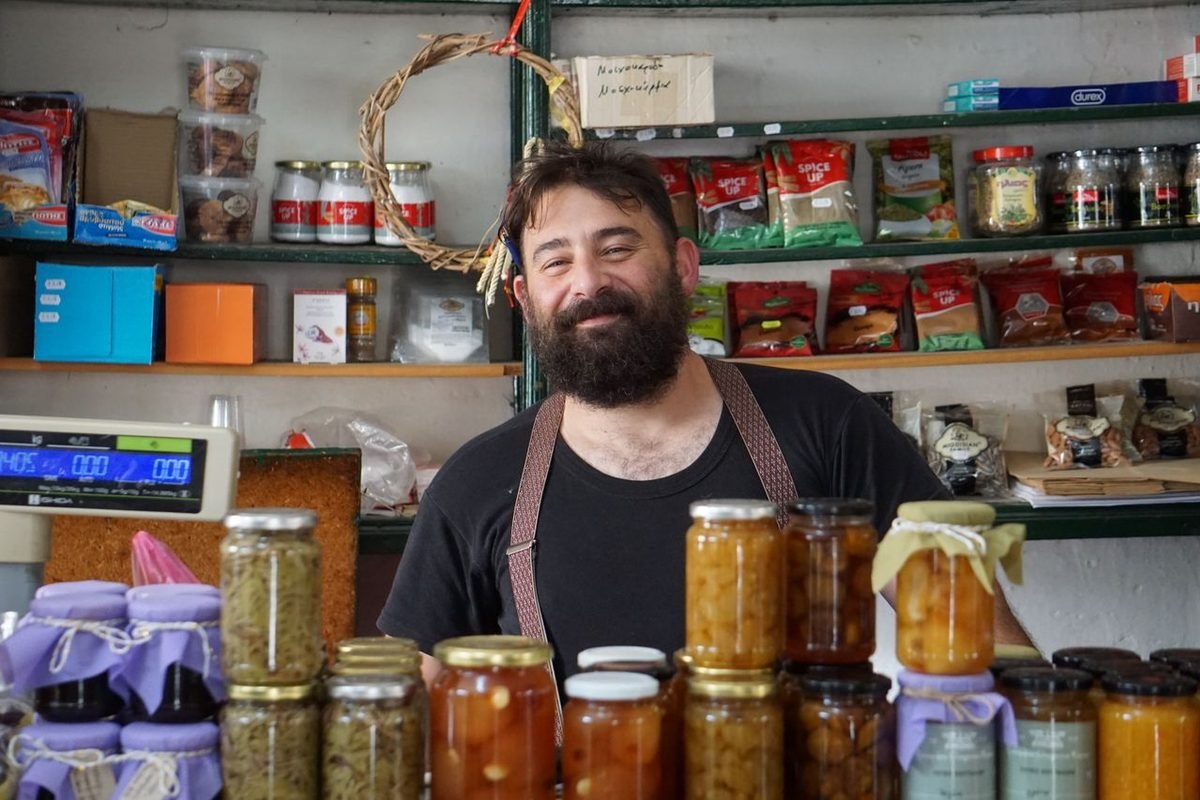
Local journalists and bloggers need stories. A business with something genuinely newsworthy, such as an anniversary, a new service, a community project, an award from a recognized body or useful local expertise, can earn coverage and a link. Keep pitches short and specific, say why it matters to the local audience and make it easy to use with a clear summary and a photo. Avoid mass-mailing the same pitch to everyone.
Sponsorships and charity involvement
Beyond sponsor pages, support causes in ways that generate real stories: donate services, host a collection drive, run a free workshop. Local news outlets and community sites often cover these, and the partner organizations will usually link to you.
Local resource pages
Many local sites keep lists of useful businesses, such as "moving checklist" pages from a real estate agent, "home maintenance resources" from a utility or "back to school guides" from a library. If your service genuinely belongs, send a short note explaining why it would help their readers. Do not ask to be added to irrelevant lists.
Partnerships with complementary businesses
An electrician and a home inspector, a wedding florist and a photographer, a dentist and an orthodontist all serve the same customers without competing. Referring customers to each other and mentioning each other on your websites are natural, honest links. Keep the references genuine and avoid a reciprocal link page that looks like an exchange scheme.
Local events and speaking
Hosting a workshop, speaking at a trade meeting or taking part in a panel often brings a link from the organizer's site, plus the credibility of being seen as a local expert. Provide a short bio and a link to give them.
Reviews and testimonials for suppliers
If you write an honest testimonial for a product or service you use, many suppliers will publish it with your name and a link. Only write what is true and avoid being compensated for it.
Step 3: Create content worth linking to
The most scalable form of link building is creating something that other people want to reference. This is sometimes called a linkable asset. It does not need to be spectacular, only useful and distinct.
- Original local data. A short survey of local customers, a summary of the real prices you see for common jobs, or the number of service calls by season in your area. Original facts tend to be cited because nobody else has them. Be transparent about how you collected the data and avoid overstating it.
- Genuinely helpful guides. A practical guide for local homeowners, such as how local building rules affect a project, or a checklist for new residents, gets shared and linked by community groups and professionals.
- Tools and calculators. A simple cost estimator, size guide or checklist solves a real problem and invites links.
- Expert commentary. When local journalists write about your field, they look for knowledgeable people to quote. Being available, quick and clear gets you cited.
- Case studies and project write-ups. Real work, described honestly, with the client's permission, shows expertise and can be shared by suppliers and partners.
- Visual resources. A clear diagram, map or infographic that explains a process can earn links when it is the best illustration of an idea. Offer it freely and make attribution easy.
Content works as a link magnet only if people can find it. Promote each piece to the people who would genuinely find it useful: local groups, suppliers, associations and journalists, with a short message that says why. Our content SEO page explains how we plan content so it supports both rankings and links.
Step 4: Outreach that gets replies
Outreach has a poor reputation because most of it is careless mass email. Good outreach is brief, specific and respectful of the recipient's time.
Find the right person
Look for the editor, author or site owner, not a generic contact address. Read their recent work, so you know what they care about. A message that shows you read their site is far more likely to be answered.
Write a message that earns attention
A good outreach message has four parts: who you are in a sentence, why you are writing, what is in it for them and a clear, small request. For example:
Hi Sam, I read your guide to winterizing older homes in Dayton. Thanks for the tips on pipe insulation. We have just published a short checklist covering the same ground, including a section on frozen meter boxes that might help your readers. If you think it is useful, I would be glad if you linked to it. Either way, thanks for a helpful guide. Dana, Hartwell Heating.
Notice what it does not do. It does not offer money, does not demand a specific anchor text, does not exaggerate and does not send the same text to a hundred people. It gives the recipient a reason, makes the request modest and leaves them free to say no.
Follow up once
People are busy, and one polite reminder after a week or so is reasonable. After that, let it go. Persistent pestering damages your reputation and the relationship.
Keep records
Use a simple spreadsheet to record who you contacted, when, what you asked, the response and the outcome. It prevents duplicate messages and shows what works.
Guest posts, digital PR and partnerships
Guest contributions
Writing a genuinely useful article for a respected publication in your field, with a short author bio, remains a legitimate way to build visibility, provided the publication has real editorial standards and the content is written for its readers. The risk lies in guest posting as a bulk tactic, publishing keyword-rich links on sites that accept anything. Google's guidance specifically warns against large-scale guest posting campaigns with optimized anchor text. A good rule is to write only for places you would be proud to appear even if the link were removed.
Digital PR
Digital PR is the practice of earning news coverage and links through newsworthy stories, data and expert comment. For most local businesses, the scale is modest: an interesting local data point, an expert response to a news story or a community initiative. The same principles apply as in traditional PR: offer something of real interest to the audience, and make the journalist's job easier.
Partnerships and sponsorships
When you pay to sponsor something, the link is a by-product of a genuine relationship, and organizers commonly publish sponsor pages as thanks. If the arrangement is more like paid advertising, ask the publisher to use rel="sponsored", which is what Google recommends. Marking links honestly protects both parties.
Anchor text and where links point
The clickable words in a link, the anchor text, help describe the target page. Natural link profiles have varied anchors, mostly the business name, the web address, generic phrases such as "this guide" and a minority of descriptive phrases. A profile in which most links use the same keyword-rich phrase looks manufactured.
- Do not ask for specific anchor text in outreach. Let the author choose.
- Do not obsess over exact match. Descriptive, natural language does the job.
- Point links where they make sense. Links to genuinely useful pages, such as guides and service pages, are more natural than links only to the home page.
- Make sure the target is worthy. A link to a thin page wastes the effort. Improve the page first.
Also check your internal links. They distribute the strength of the links you earn across your site, so a strong link to a guide can be passed on to service pages through sensible internal linking, as explained in our on-page SEO guidance.
What not to do, and the offers to refuse
If you own a business, you have almost certainly received unsolicited emails offering backlinks. Most are traps. Here are the offers to refuse, and why.
- "100 high-authority backlinks for $50." These are usually automated or placed on networks of low-quality sites. They are the sort of links Google's spam systems are designed to ignore or penalize.
- "Guaranteed first-page rankings." Nobody outside Google can guarantee a ranking. See our guide on how long SEO takes.
- Link packages from private blog networks. They may work briefly, then collapse and take your site with them.
- Paid placements without marking. Paying for an unmarked link is a violation of Google's guidelines.
- Mass directory submission. Submitting to hundreds of low-quality directories adds little value and may harm you.
- Comment and forum spam. Dropping links in comments and forums is ignored at best and can damage your reputation.
- Reciprocal link pages. A page of "our partners" with nothing in common is a signal of link exchange.
- Expired-domain redirects and similar tricks. They are designed to pass authority artificially and are against the guidelines.
When someone selling links asks you to trust them because they have "clients in your industry", ask for their method in writing, ask how links are marked and ask what happens if Google takes action. A reputable provider will answer plainly. A scheme will not.
If you already have bad links
If a previous provider built links in ways that break Google's rules, you do not have to panic. Google says it is generally good at ignoring spammy links, and most sites with a few poor links never see a problem. Action is needed mainly if you have a manual action in Search Console, or if the links are clearly paid, large-scale and manipulative.
- Check Search Console for a Manual Actions message. If there is none, take a breath.
- Audit your links. Export the links reported in Search Console, and use a link tool for a fuller picture. Look for patterns such as many links from unrelated, low-quality sites with identical anchors.
- Try to remove the worst ones. Ask the site owners to take them down, and keep a record of your attempts.
- Disavow only when necessary. Google's disavow tool is meant for cases where you have a manual action or are confident that you have a large number of manipulative links you cannot remove. Used carelessly, it can hurt, so seek expert help.
- Change the approach and begin earning links properly, and give it time. A recovered site needs good links as well as fewer bad ones.
Measuring link building honestly
Links are a means, not the goal. The measures that matter are the outcomes they support.
- Links earned, counted by quality, with their source, relevance and whether they are editorial. Ten good links beat a hundred poor ones.
- Referral traffic. Visits from the linking pages, tracked in analytics. It shows whether the link has real-world value.
- Visibility. Impressions, clicks and positions in Search Console for the pages you have promoted, over several months.
- Brand searches. A rise in people searching for your business by name often follows real coverage and community activity.
- Inquiries and sales. The ultimate test. Ask new customers where they heard of you.
Do not expect fast results. A link needs to be discovered, processed and weighed alongside everything else, and its effect on rankings is usually gradual and hard to separate from other work. Judge a program over six to twelve months, with realistic expectations of the kind we describe in how long SEO takes.
A first 90 days of link building
| Period | Focus | Outputs |
|---|---|---|
| Days 1 to 30 | Foundations and quick wins | Claim profiles. Find unlinked mentions and ask for links. Check supplier, manufacturer and association listings. Identify local sponsorships you already have and request sponsor page links. |
| Days 31 to 60 | Create something worth referencing | Choose one linkable asset, such as a local guide, a data point or a calculator. Publish it on a strong page and make sure it is useful. |
| Days 61 to 90 | Outreach and relationships | Send personalized outreach to ten to twenty relevant local sites, publications and partners. Offer expert comment to local journalists. Review results and refine. |
Repeat the cycle quarterly, increasing the scale only as the quality of your assets and outreach justifies it.
How the approach changes by industry
The principles are constant, but the best opportunities differ by field. Here are examples of where to look first.

- Home services (HVAC, roofing, plumbing). Manufacturer dealer and certified installer pages, local home builders and real estate agents, hardware suppliers, neighborhood associations and local news stories about weather and seasonal safety. Our guides for HVAC and roofing include more detail.
- Dental and medical practices. Professional associations, school and community health events, local charity clinics, and expert commentary for local media on health topics within your qualification. Keep to what you are qualified to say, as in our dental SEO guide.
- Legal and financial services. Bar and professional association directories, community seminars, local business publications and expert comment on changes in law or regulation, where the advice remains general and compliant with professional rules.
- Restaurants, retail and hospitality. Local food and events bloggers, tourism boards, supplier pages, farmers' market organizers and community event listings.
- Ecommerce stores. Brand and supplier partner pages, product roundups and reviews from relevant publications, resource pages in your niche and original data or guides, as described in our ecommerce link building page.
- Multi-location brands. Local pages for each branch, with local sponsorships, partnerships and press, handled in a way that keeps each location's links relevant to its own community. See multi-location SEO.
In every case, the best link is one that sits on a page your customers might actually read.
Who should do it, and how much time it takes
Link building is more relationship work than technical work. For a small business, the owner or a manager is often best placed to handle the local relationships, because they know the suppliers, the community groups and the story. The research, the tracking and the outreach drafting can be handled by a marketing person or an agency.
As a guide to effort, a small business can usually make steady progress with a few hours each week:
- One hour on finding and claiming simple links, such as unlinked mentions and supplier pages.
- One hour on a content asset, or on improving one you already have.
- One hour on outreach and replies.
- Time on community involvement, which you probably already spend.
If you hire an agency or freelancer, ask for a monthly report that lists each link earned, where it is, how it was earned and what it cost, if anything. A report that gives only a total number is not good enough. You should be able to open each link and judge it yourself.
How to vet a link building provider
If you decide to outsource, the stakes are high, because the wrong provider can damage your site. Ask these questions before you sign.
- How do you find link opportunities? Good answers describe research into relevant sites and relationships. Poor answers talk about "our network".
- Can you show examples of links you have earned? Look at the sites. Are they real, relevant and edited?
- Do you pay for any links, and how are they marked? A transparent provider will say yes or no and describe how paid links are disclosed.
- What do you do if a link is lost or removed? It happens, and the provider should have a plan.
- Who writes the content and the outreach? Avoid anyone who outsources everything to unknown contractors.
- What will you not do? A trustworthy provider has a clear list, such as no private networks, no automated links and no guarantees of rankings.
- Who owns the content and assets? They should be yours.
- How will we measure success? Look for links earned by quality, traffic and visibility, not only a count.
Be wary of unusually low prices, because quality outreach takes real human time. If a price seems far below the market, ask what is being skipped.
A worked example: a family-owned landscaping company
Take a fictional landscaping company serving a mid-sized town. It has a good website, a verified Business Profile and a steady flow of reviews, but few links beyond its directory listings.
In the first month, the owner searches for the company name and finds three local news stories and a garden club newsletter that mention the business without linking. Polite requests win two links. The company is a certified installer for an irrigation manufacturer and is not listed on the manufacturer's installer page, so it applies and is added. It is also a sponsor of a youth soccer league, whose sponsor page has no link, and a quick message fixes that.
In the second month, the team writes a practical guide on what grows well locally, based on the company's own knowledge of the soil, the frost dates and the plants that have survived in the area. It includes a simple planting calendar and a short list of common problems. The guide is published on a strong page of its own.
In the third month, the owner sends five personal messages to the garden club, the local library, a regional gardening blogger, the town's sustainability group and a nursery that does not compete. Two share the guide, and a local newspaper columnist asks for a quote on a spring planting story. The company also offers a free workshop at the library, which the library lists with a link.
None of that involved buying anything or tricking anyone. The result is a handful of relevant, editorial links from real local organizations, new inquiries from people who read the guide and a stronger standing in the community. It is also the start of relationships that can generate more in the future, which is how honest link building compounds.
How we help
At AH SEO Agency we do not buy links, run private networks or promise a number of backlinks. Our link work starts with a review of your current profile and your competitors, then focuses on the claimable links, the local relationships and the content that give you a reason to be referenced. We handle the research, the outreach and the reporting, and we tell you plainly what we expect and how long it will take. You can read more on our link building page, see our local SEO service or request a free SEO audit to see where your links stand today.
Summary
- Links remain an important signal and a visible sign of trust, but quality, relevance and naturalness matter far more than quantity.
- Google prohibits buying or exchanging links that pass ranking credit, mass guest posting, automated links and private networks, and paid links must be marked.
- Start with links you are already entitled to: unlinked mentions, suppliers, associations and sponsorships.
- Local businesses can earn links through press, community involvement, partnerships and genuinely useful content.
- Outreach should be personal, brief and honest, and should never promise or demand anything in return.
- Judge success by quality links, referral traffic, visibility and inquiries over many months.
Related guides
Local citations: what they are and which ones matter
What local citations are, whether they still matter, which ones are worth having and how to audit, clean up and maintain your listings for consistent local SEO.
Read the guideLocal SEOLocal SEO explained: how the Google map pack works
How the Google map pack ranks businesses: relevance, distance and prominence explained, what you can influence and a practical plan to improve local visibility.
Read the guideSEO fundamentalsHow much do SEO services cost in the USA?
What SEO costs in the USA: pricing models, typical ranges, what drives the price, how to compare proposals and how to work out whether it can pay back.
Read the guideFrequently asked questions
Are backlinks still important for SEO?
Yes. Google's documentation says links help it discover pages and are among the signals it uses to understand pages, though it uses many other factors. Quality and relevance matter far more than the number of links.
Is it okay to pay for backlinks?
Paying for links that pass ranking credit goes against Google's link spam policies. If money or products are exchanged, the link should be marked with rel="sponsored" or nofollow. Paid sponsorships can still be worthwhile for visibility and traffic.
How many backlinks do I need?
There is no target number. Look at the sites that rank for your main searches and focus on earning links of similar quality and relevance, because a few strong editorial links can outweigh many weak ones.
What is the safest way for a local business to get links?
Claim links you are already entitled to, such as unlinked mentions, supplier and association listings and sponsorships, then earn more through local press, partnerships and genuinely useful content.
Should I use the disavow tool?
Rarely. Google says it is generally good at ignoring spammy links. Use disavow only if you have a manual action or a large volume of manipulative links that you cannot remove, and take expert advice first.
How long does link building take to work?
Individual links can be found within days, but their effect on rankings is gradual and hard to isolate. Judge a link building program over six to twelve months, alongside other improvements to the site.
Not sure where your site stands?
Send us your website and we will tell you what we would fix first, including if SEO is not your best next step.